Run forever and ever! Riding the Heisei Chikuho Railway
Index
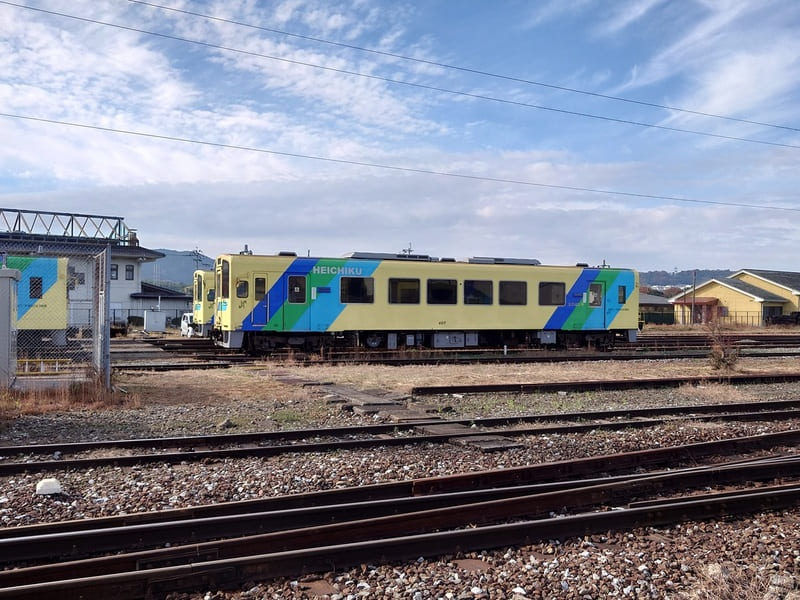
Heisei Chikuho Railway, a third-sector railroad running in the Chikuho region, is at a crossroads. Will it survive or be closed? Local railroads that have supported local communities throughout Japan are disappearing due to loss-making operations or disaster damage. I wonder if the Heisei Chikuho Railway will somehow survive. But, I have been traveling by car for most of my life, so what am I going to do now? So why don't we take a ride on the Heisei Chikuho Railway and explore the charms of the railroad and the areas along it? So, let's get on the train and explore the charms of the Heisei Chikuho Railway and its rail line!
Buy a one-day pass for unlimited rides
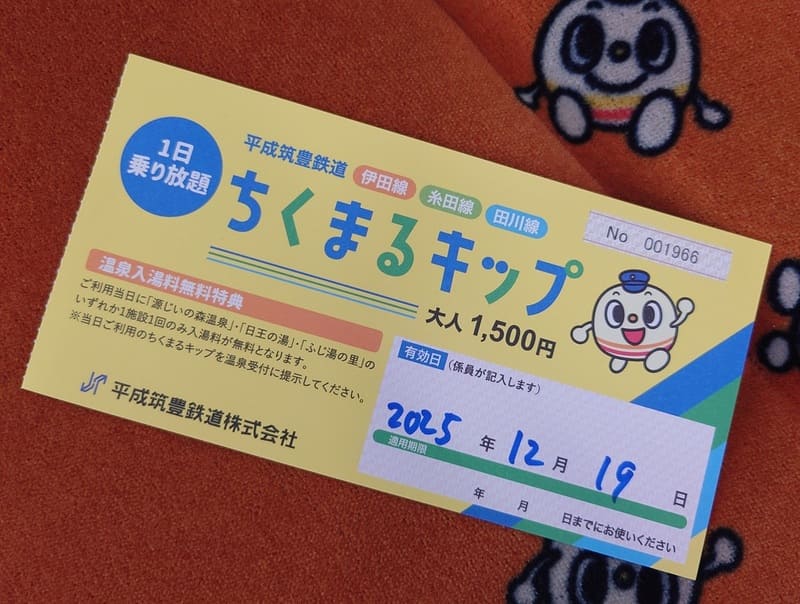
From Hakata Station, take the Fukuhoku Yutaka Line to Nogata Station. This is because Nogata Station is the first station on the Heisei Chikuho Railway (hereafter referred to as "Heichiku") line. Heichiku trains can be seen from the platform of the Fukuhoku Yutaka Line. When I went to the Heichiku ticket gate, I was at a loss. There was a ticket vending machine, but no station staff. Where do you buy a "Chikumaru Kippu" (unlimited one-day ride) ticket?
Then the driver came along. I'd like to buy a Chikumaru ticket. We sell them inside the train. In fact, Nogata Station of the Heichiku Line is an unmanned station, and the one-day ticket is purchased directly from the driver on board the train. The ticket allows unlimited rides for one day and free use of one of the three hot spring facilities along the train line. This is an attraction for those who love hot springs.
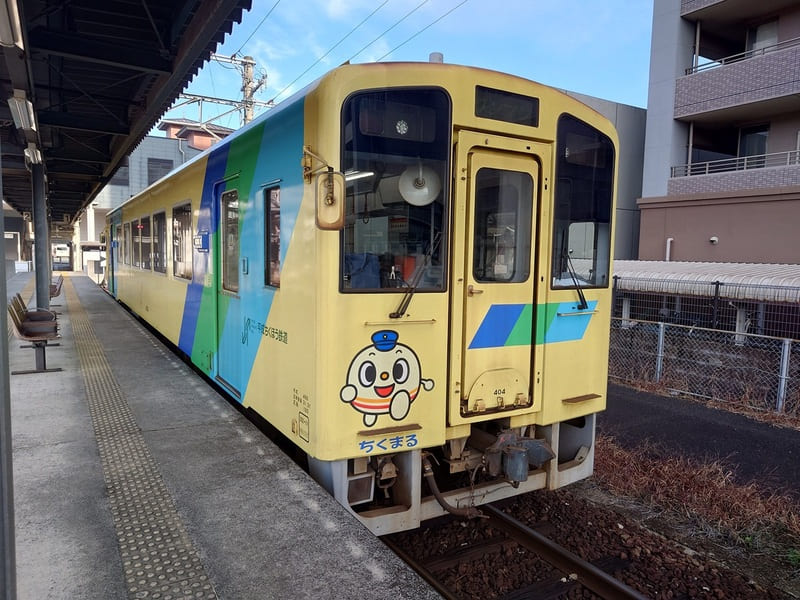
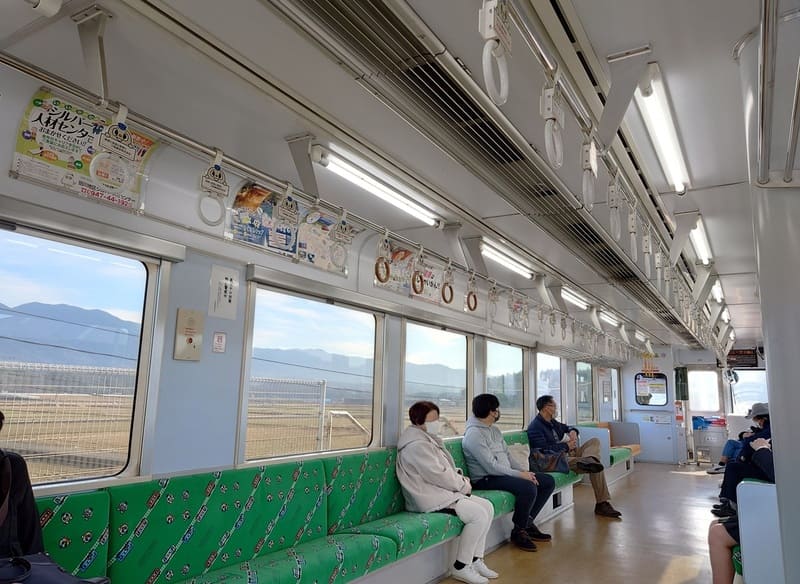
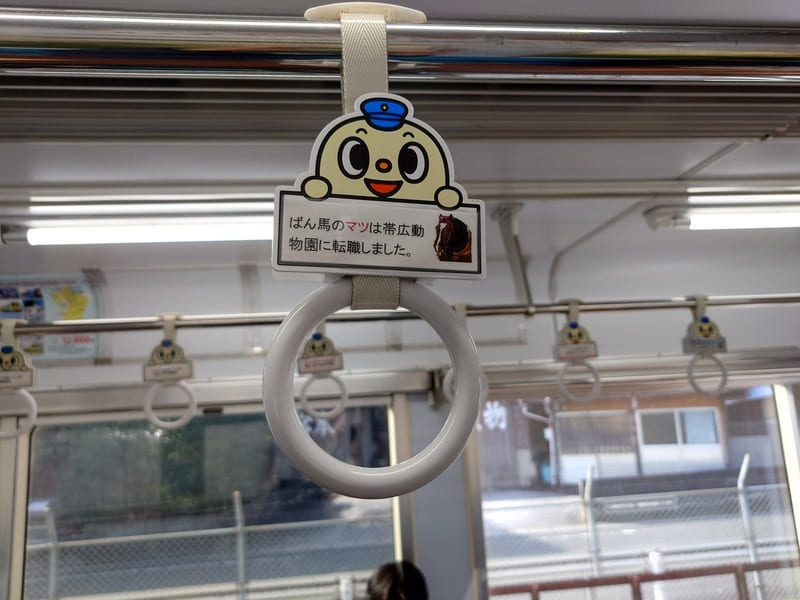
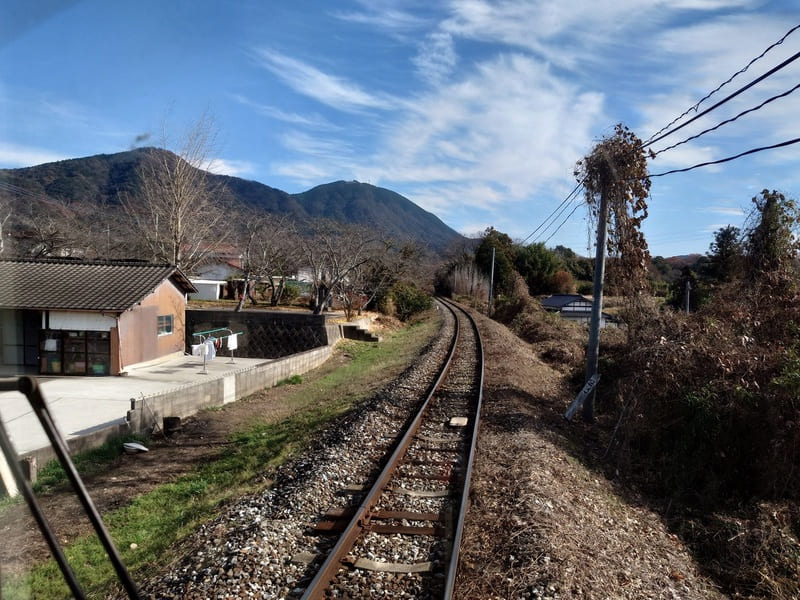
The train is a one-car, one-man operation. It is around 10:00 a.m. on a weekday morning, and there are few passengers, partly because it is not a commuting time. The train leaves Nogata Station and starts to run. The scenery gradually changes from the city to a tranquil scene. Looking at the strap in front of me, I see a message written under the "Chikumaru" character. The message reads, "Matsu, the banba horse, has moved to the Obihiro Zoo.
The "Chikumaru" is an owner-operated suspension strap on which companies, organizations, and individuals from the areas along the line can place their messages. The majority of the messages are in support of Heichiku. I felt the support of the local community. But what is a "Banba no Matsu"? By the way, a "banba" is a racehorse in the Banei horse race, in which horses are made to pull heavy loads. What does this have to do with Heichiku? While I was thinking about that, the train was still running.
Ride and find out! The depth of each station!
The Heichiku line has its roots in the mid-Meiji period when Kyushu Railway, a private railroad company, merged with Chikuho Railway and took charge of railroad transportation in the Chikuho region, which was booming with coal mining activity. The company became Japan Railways (JR) at the end of the Meiji era when it was nationalized, and later privatized, with Fukuoka Prefecture and local governments taking over the operation of the three lines as the third sector. That was in 1989. That is why it was named "Heisei Chikuho Railway. However, the coal mines in Chikuho have disappeared with the closure of the mines, and the area no longer has the splendor it once had.
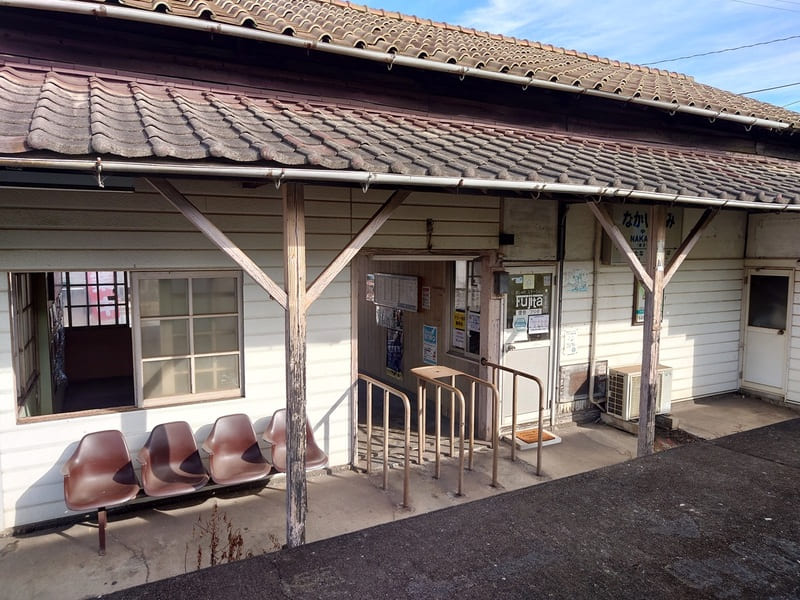
The station building is also old, as if it had been left behind by time at an unmanned station. Nakaizumi Station, the fourth station from Nogata Station, is also old as you can see. However, if you look closely, you can see the door of "Barber Fujita" next to the ticket gate. It is said to be operating in the former station office. It is not unmanned, but the owner of the barber shop is protecting the station.
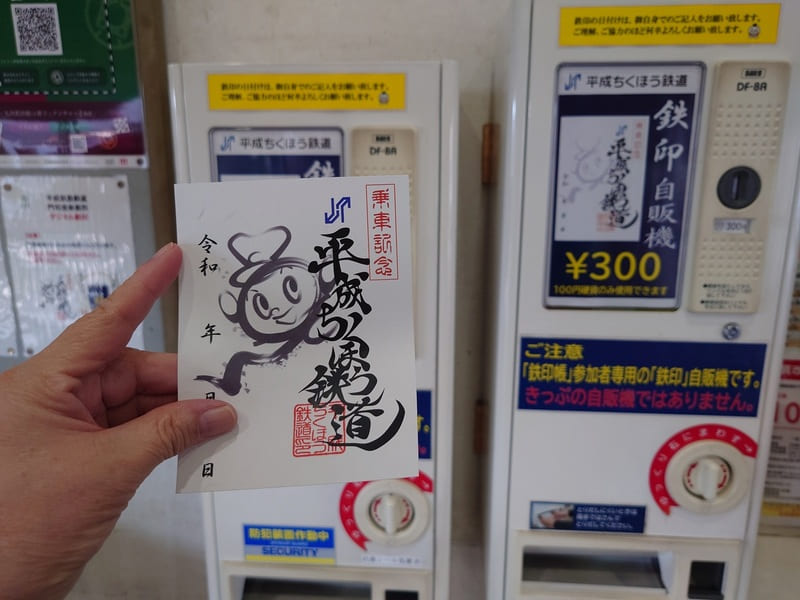
We got off the train at Kanada Station. This is the only manned station in Heichiku, and is a branch station of the Ita Line between Nogata Station and Tagawa-Ita Station, and the Itoda Line between Kanada Station and Tagawa-Gotoji Station. In fact, it is popular among railroad fans as a pun that a domestic railroad ticket can be used to go to "Canada". Here, you can purchase an iron seal from a vending machine. Another person who seemed to be a "Chikumaru Kip" user was also buying one. From this station, there is a shuttle bus service to "Nichio no Yu" and "Fuji Yu no Sato" only in the morning. The same kip users can take a bath for free. We also found a standing bar in this station building. I guess they open in the evening. After getting off the train, I had a little drink before going home! Nice.
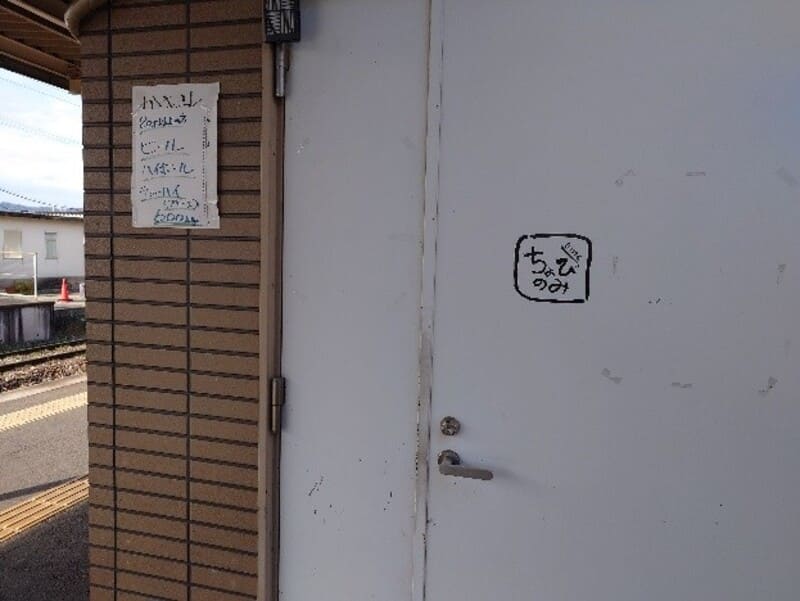
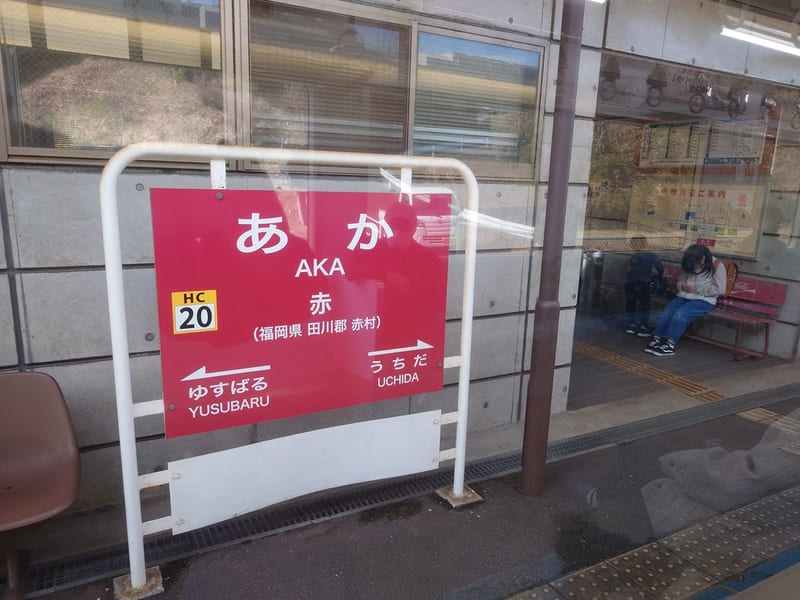
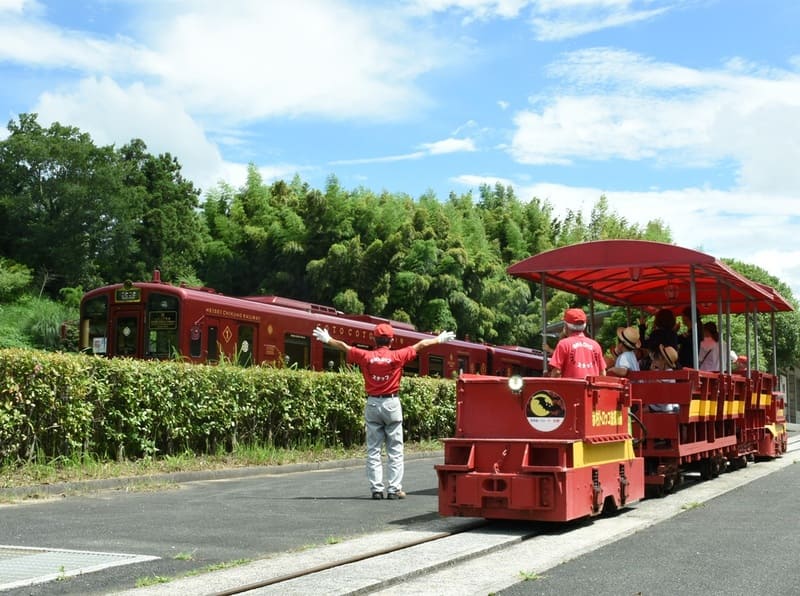
After a leisurely wait for the hourly train, we boarded the train again. After passing Tagawa-Ida Station, the train becomes the Tagawa Line until the last stop, Gyobashi Station. As the name "Aka Eki" suggests, the ground of the station sign is red. A cute trolley train runs from in front of the station on the second Sunday of every month from March to November every year. The train is called "Akamura Trolley Yusubaru Line. The Yusubaru Line is actually a "phantom railroad" that was built as a railroad for coal mines but was abandoned without ever being used. It is operated by volunteers from Akamura, and the fare (600 yen for adults and 300 yen for children) is donated to the maintenance of the area around Akamura Station. Advance reservations are not possible. Inquire at the Aka-mura Town Hall.
☎0947-62-3000(Photo courtesy of Red Village Hall)
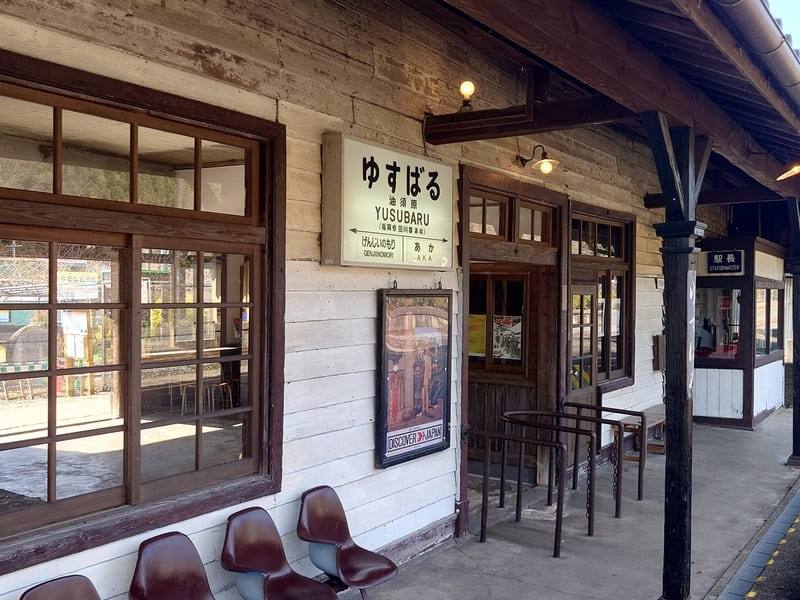
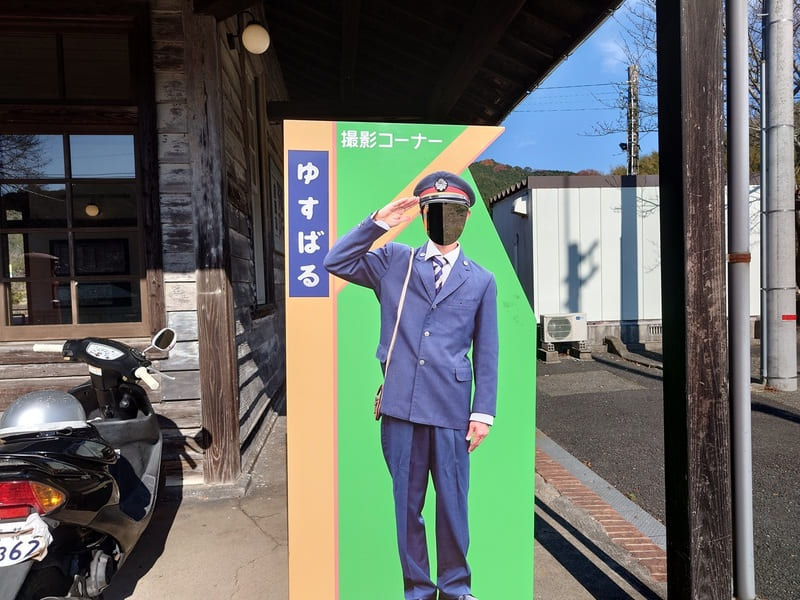
I got off the train again at "Yusuhara Station. The charm of this station building sticks even if you are not a railroad fan. Opened in 1895 as a station of the Hoshu Railway, the 130-year-old station building has been unmanned for 42 years. It has aged to a certain degree, and four years ago, Akamura and the Nishinippon Institute of Technology restored and renovated the building. Aluminum sash windows were replaced with wooden windows with wooden cleats, and aluminum doors were replaced with wooden ones. The lighting was also changed to retro light bulbs to restore the atmosphere of the Meiji period.
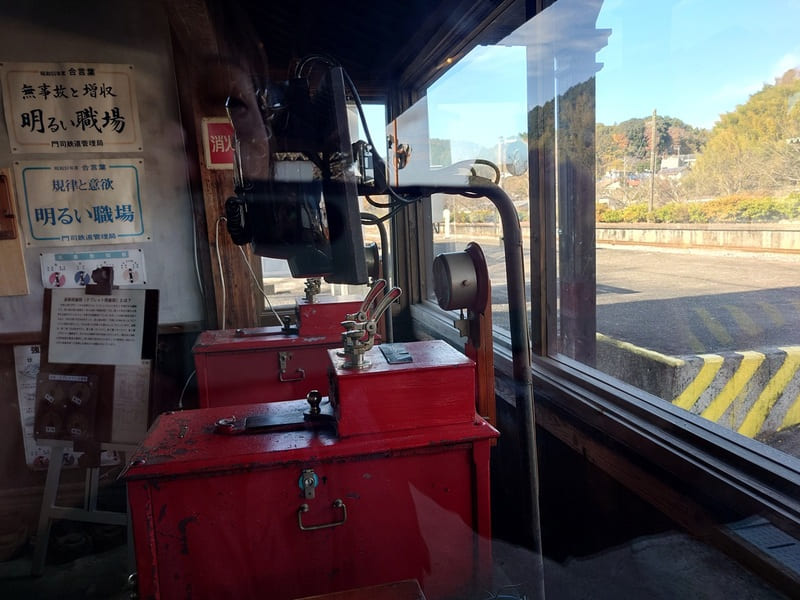
Currently, the "Monthly Yusubaru Station Marche" is held when the "Akamura Trolley Yusubaru Line" is in operation, with local restaurants and stores selling goods. Visitors can experience the use of a tablet blocking machine in the station office. The ties between the community and the station are still strong today.
Onsen (hot springs), sake, and holiday wanderings along the train line
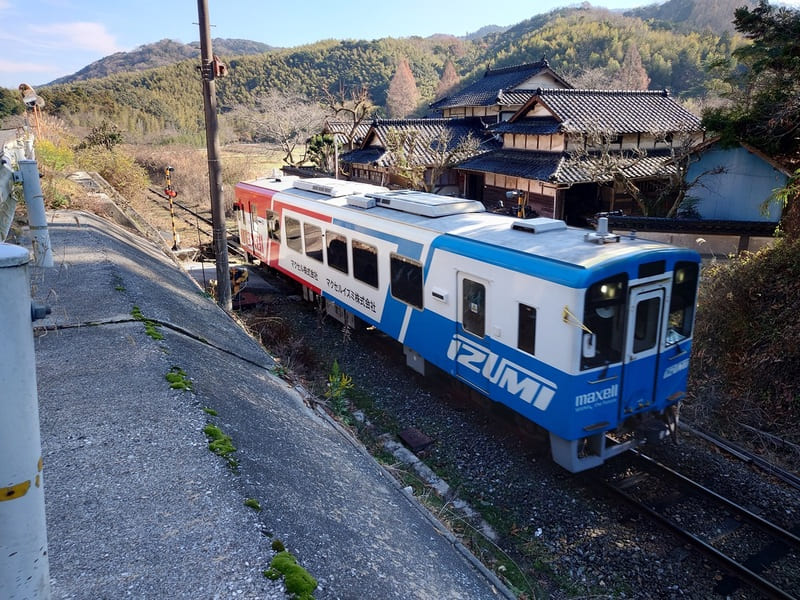
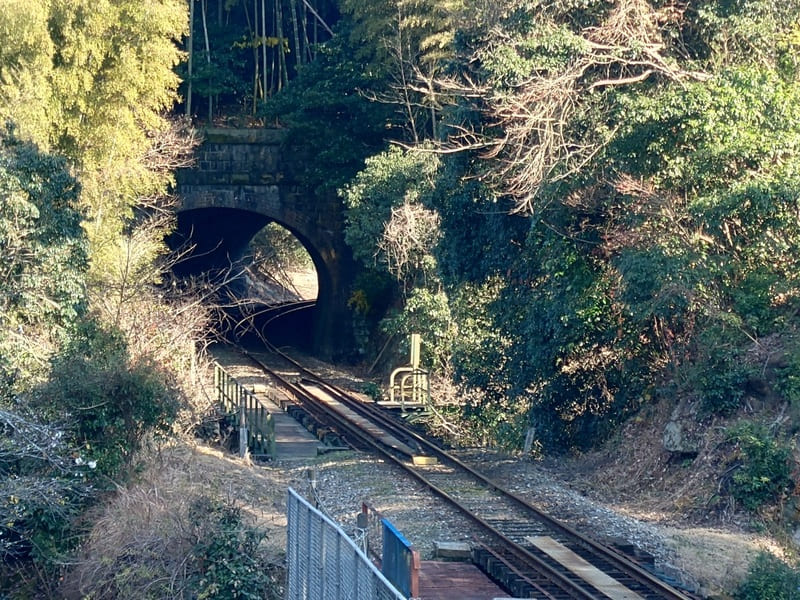
From Aburusubara Station, we went to the neighboring Genji-no-mori Hot Spring Station for a short walking tour. Since the train runs only once an hour during the day, a 20-minute walk is just right for one's health, rather than waiting for the next train. It is also convenient to walk in a straight line almost along the railroad tracks. On the way, we found a brick bridge over the Ootagawa River. This bridge was built when the Hoshu Railway was established. The tunnel is narrow, and only one light car can pass through.
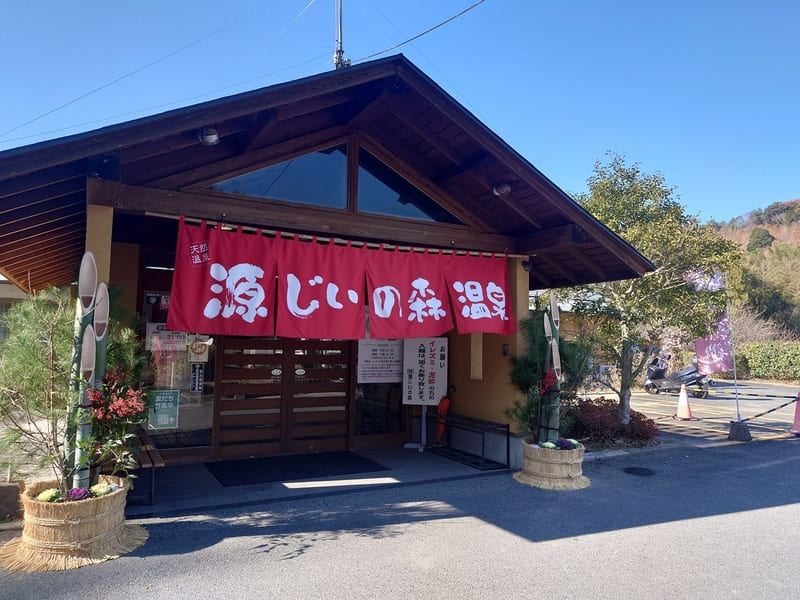
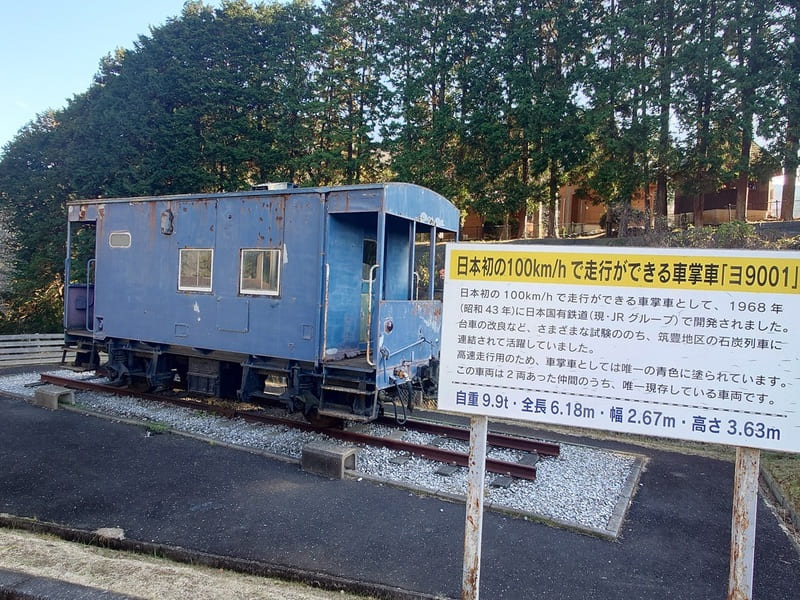
Now, Genji-no-mori is a village facility with a campground, lodging facilities, hot springs, and a restaurant. The day-trip hot spring facilities can be used with a "Chikumaru Kip". It is directly connected to the station, and a railroad track passes through the grounds. Japan's first conductor car running at 100 km/h is on display outdoors and will be of interest to railroad fans. The Issaka Tunnel, Kyushu's oldest railroad tunnel, can be seen from here. It is also a nationally registered tangible cultural property.
After having lunch at the restaurant, we went to the hot spring. The large bathhouse has two open-air baths, one with a Jacuzzi tub. The baths are said to be good for neuralgia, muscle pain, and sensitivity to cold. It is a paradise of relaxation while worrying about the time of the next train. By the way, lunch at the restaurant was also quite tasty and memorable.
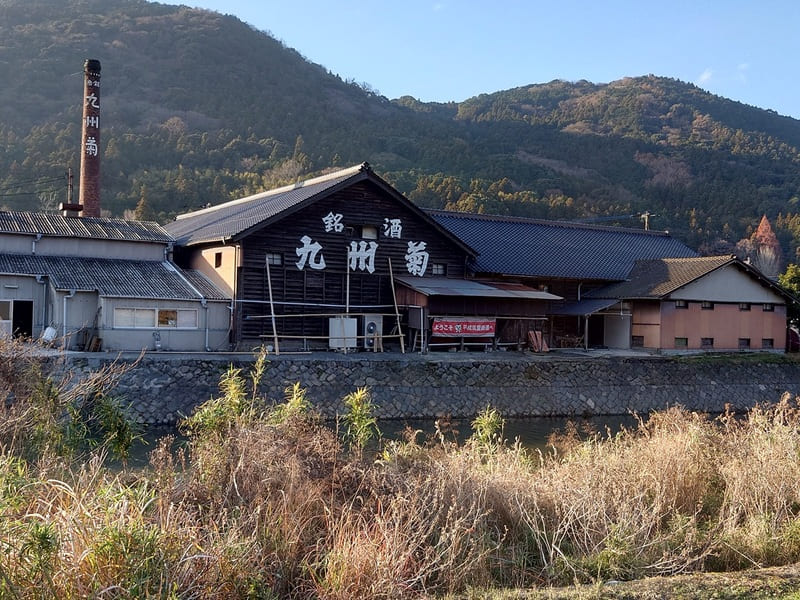
Then, with my body after taking a hot bath, I boarded the train for the third time. We headed for the next station, Sakiyama Station. The goal here is to visit a sake brewery. Soon the sake brewery comes into view from the train window. The name "Kyushu Kusu Kiku" is painted on the wall and brick chimney of the brewery, which looks like it has a long history. It is about a 10-minute walk from Sakiyama Station to the Hayashi Ryuhei Sake Brewery. It is located between the Imagawa River, which originates from Mt.
The brewery was founded in 1837 at the end of the Edo period (1603-1868) and has a history of nearly 190 years. It is the only remaining sake brewery in the Kyotsuki area. I had heard a rumor that the sake "Zanshin" was delicious, and it was even served on the JR Kyushu "Nanatsusei in Kyushu" train. When I asked for "Zanshin," the reply was, "Unfortunately, we don't sell it directly. They said they do not make it in time of the year, and that it is available at certain well-known department stores. It is a pity about Zanshin.
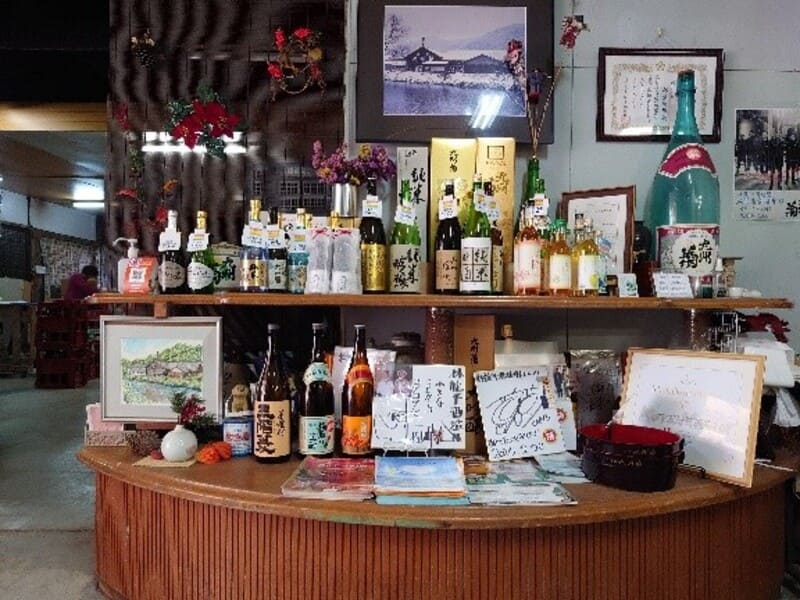
I got myself together and bought two four-packs of "Kyushu Kiku Junmai Ginjo". When I told him that I was traveling by Heichiku Kippu, he gave me a Heichiku calendar. I hope they keep the Heisei Chikuho Railway. The gourmet train "Tokokoko" is very popular. We have groups of people coming from Okinawa to ride it," said the owner's wife. We wished Heichiku good luck and had this sake tonight.
A variety of local trains, both inside and out
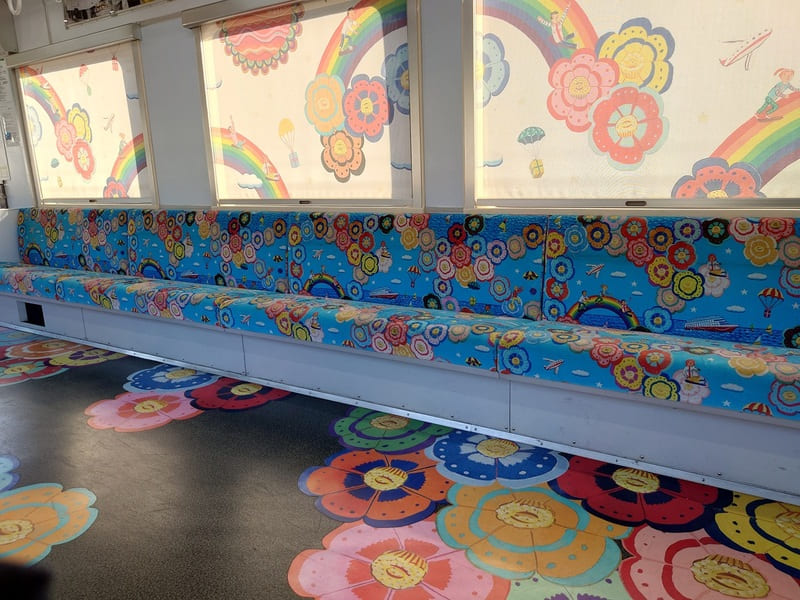
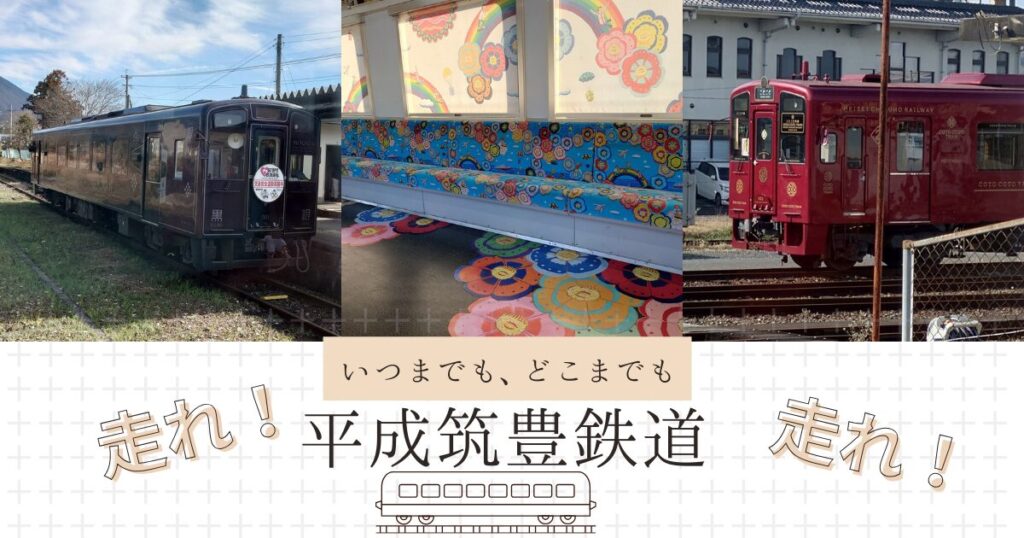
The trip using a one-day pass ends at the last stop, Yukuhashi Station. Like Nogata Station, it is connected to Gyobashi Station on the JR Nippo Line. As I boarded the train, I noticed the individuality of the cars. There are cars wrapped with corporate wrapping, car 412, which carries on the colors used when the line first opened, the yellow-colored "Nanohana-go," the green-colored "Chikumaru Line Stamp-go," and the "Super Happy-go," with its bright, pop art. The "Super Happy" was created by Miyazaki Kensuke, an artist who has been involved in the preservation of mural paintings around the world, and the children in the community colored in the rough sketch. Local children painted the pictures. As you can see inside the car, the floor, seats, and even the roll screen create an exciting and fun atmosphere.
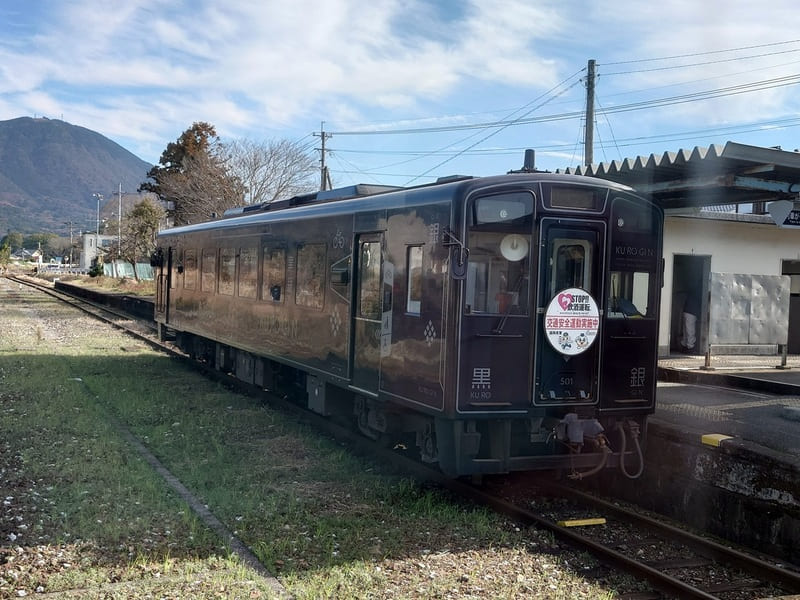
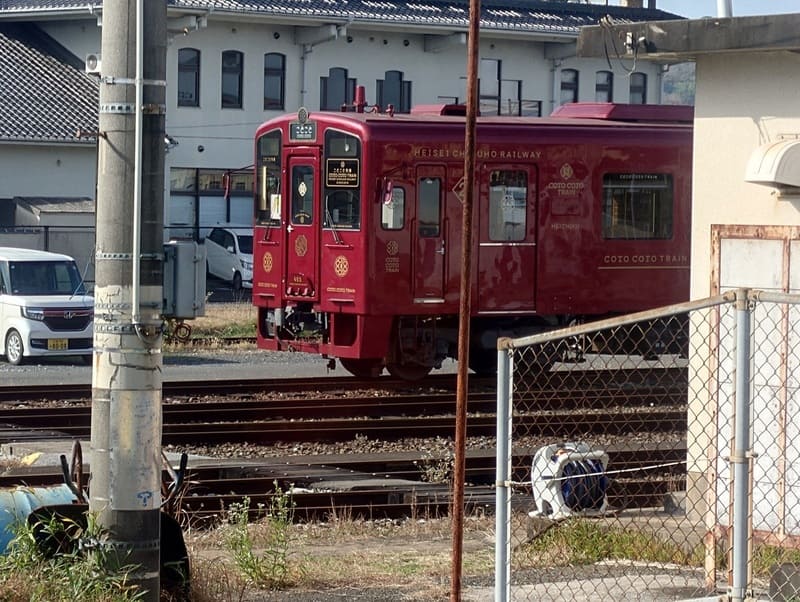
The gourmet train "Kotokoto Train" is equipped with a restaurant kitchen, and its body is a vivid deep red. The train was designed by Eiji Mitooka, who is also famous for his work on the "Nanatsusei in Kyushu. The interior, like the "Natsukoto" train, is decorated with Okawa Kumiko, a traditional craft of Fukuoka Prefecture, for the fittings, and German-made glass stained glass on the ceiling for a sense of luxury. This is the first time in Japan that stained glass has been used for the entire length of a passenger cabin. Also not to be missed is the "Kurogin," a cycle train with a powerful black body. This train was designed by Kenta Urashima, a former apprentice of Eiji Mitooka. The black metallic color is reminiscent of coal, the "black diamond" that built Chikuho's prosperity.
I hope that the Heisei Chikuho Railway, which has supported the leg of Chikuho, will continue to run forever!
Heisei Chikuho Railway Co.
| Location | 1145-2, Kanada, Fukuchi-cho, Tagawa-gun, Fukuoka, Japan |
|---|---|
| Phone number | 0947-22-1000 |
| Official Site | https://www.heichiku.net/ |