Enjoy driving via a roadside station! 7 plum viewing spots in Kyushu, 2026

Roadside Station Stopover Course
2026Seven plum viewing spots in Kyushu
Plum blossoms signal the arrival of spring.
The overwhelming plum grove of old trees at the historic site, planted to harvest the ume fruit, is also a sight to behold.
Why don't you go and enjoy the scent of ume blossoms wafting on the wind and the pretty blossoms opening?
The best time to see the flowers changes depending on the weather and other factors. Please check in advance before visiting.
*Please note that some ume groves where ume berries are harvested have a set period during which they are open to the public.
Tanigawa Plum Grove → Roadside Station Tachibana

Plum grove in Tachibana-cho, Yame City, where ume (plum) trees are grown
Tanigawa Plum Grove is one of the best plum groves in Kyushu and is said to be one of the three best plum orchards in Kyushu. The vast ume grove, with approximately 20,000 trees planted, is situated on a hillside, and the white ume trees in full bloom on the gentle slope are beautiful.
During the event, visitors can also enjoy approximately 3,000 bamboo lanterns during the daytime at the "Bamboo Akari: World of Light and Illusion" (charged), which is located in a wine cellar at the venue.
Please note.
The Tanigawa Plum Grove is the private property of plum growers and is open only during the plum blossom viewing event.
*Temporary parking lots and shuttle buses will be available for access to the venue.
| name | Tanigawa Plum Grove |
|---|---|
| address (e.g. of house) | Near 1742 Tanigawa, Tachibana-cho, Yame-shi, Fukuoka 834-0074 Event: The 37th Yume-Tachibana Plum Blossom Viewing Party |
| date(s) (e.g. for exhibition) | Saturday, February 21 and Sunday, February 22, 2026 Admission to the Bamboo Light Illusion World is from 10:00 a.m. to 4:00 p.m. Stage events, product sales, etc. |
| supplementary information | The Tanigawa Plum Grove is the private property of plum growers and is open only during the plum blossom viewing event. ▼Please click here for more event information details. Yame City Official HP ■Nearby Roadside Stations Photo courtesy of Yame City Tourism Association, Tachibana Branch |
Ushio Plum Grove → Roadside Station Shiroishi
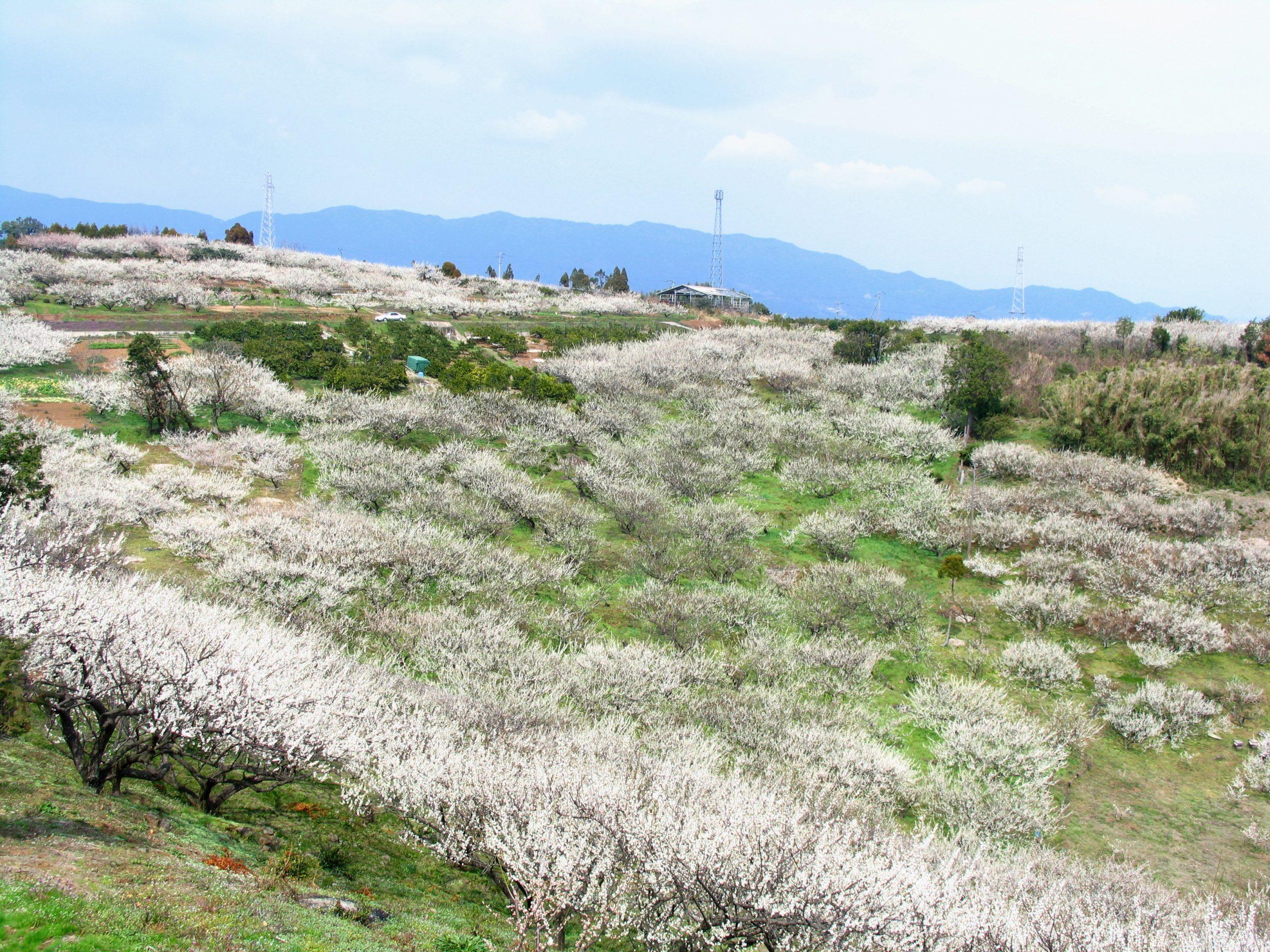
Famous for plum blossoms since the end of the Edo period
A historic place known for its ume plum blossoms since the end of the Edo period.
About 5,000 ume (plum) trees are grown on a vast area of about 22 hectares centering on Mount Ushio, about 80 meters above sea level, located in the western part of Ogi City. The summit of the mountain commands a panoramic view of the Saga Plain, and on a clear day, Unzen can be seen in the distance.
The southwestern area is a spectacular spot where white plum trees look like a white carpet. Ushio Shrine, with a history of 1,200 years, is also worth seeing at the foot of the mountain.
*Please use the temporary parking lot and shuttle bus on the days of the Ume Festival.
| name | Ushio Bairin (Ushio Plum Grove) |
|---|---|
| address (e.g. of house) | 4907 Ikegami, Ogi Town, Ogi City, Saga Prefecture Venue: Around Ushio Shrine |
| supplementary information | ▼Please click here for more event information details. Ogi City Tourism Association Official HP ■Nearby Roadside Stations |
Original plum grove, Koumaen (Koumaen) → Roadside Station Nagasaki Kaido Suzudatoge

A place of rest and relaxation created by the locals
The original plum grove "Torama-en" in Matsubara-cho, Nagasaki City, a village of planted trees, is a resting place created by the local people.
The place is a popular destination for visitors to enjoy the ume (Japanese apricot) season. During the ume season, which heralds the arrival of spring, visitors can enjoy approximately 400 ume trees of 140 varieties, including white, red, and weeping ume. The blooming time differs depending on the variety, so visitors can enjoy the flowers from the end of January to the beginning of March.
| name | Original plum grove Toraumaen |
|---|---|
| address (e.g. of house) | 1533 Matsubara-cho, Nagasaki 851-0131, Japan |
| supplementary information | ▼Flowering times and other information can be found on the Toraumaen social networking site. ■Nearby Roadside Stations Photo courtesy of Tora Maen |
Yoshino Plum Garden → Roadside Station Mie
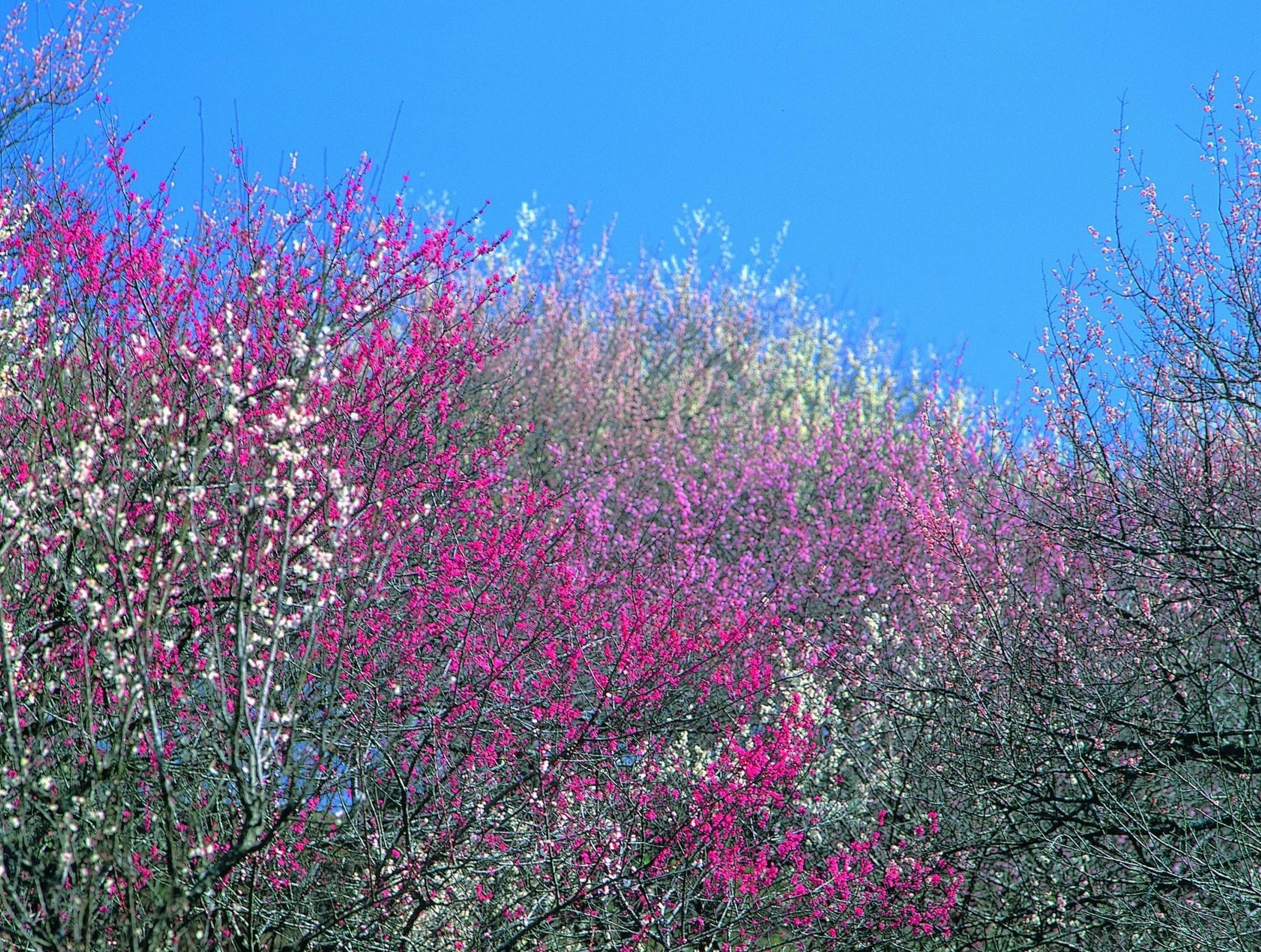
One of Oita Prefecture's representative plum blossom viewing spots
Yoshino Plum Garden" is one of Oita Prefecture's most famous plum blossom viewing spots. Visitors can enjoy approximately 450 plum trees, including Bungo ume, Aoki ume, Shirokaga ume, Kanko ume, and Garyu ume. It is said that the Yoshino Plum Garden began when a branch of a plum tree from Dazaifu Tenmangu Shrine (Fukuoka Prefecture) was brought back to Japan.
Garyubai" is the representative of Yoshino Plum Garden. The name "Garyubai" comes from its resemblance to a dragon lying on the ground.
The "Yoshino Plum Blossom Festival" is held every year from mid-February to early March, featuring Garyubai Daiko drumming, Yoshino stick fighting, the Sayanagi lion dance, Sumo Jinku, and local Shinto music and dance.
| name | Yoshino Umeen |
|---|---|
| address (e.g. of house) | 537 Sugihara, Oita City, Oita Prefecture 879-7882 Event: Yoshino Ume Festival |
| date(s) (e.g. for exhibition) | February 15 (Sun.) - March 1 (Sun.), 2026 |
| Hours. | 10:00 - 15:00 Opening: Yoshino Plum Garden (Sugihara), Umenoki Tenmansha |
| supplementary information |
▼Please click here for more event information details. ■Nearby Roadside Stations Photo courtesy of Oita City Tourism Association |
Hitoyoshi Plum Garden → Hitoyoshi Roadside Station

A place closely associated with the city flower "ume" (Japanese apricot)
Approximately 4,600 ume (Japanese apricot) trees of the white lineage (Shirokaga Shirokaga) with beautiful large single blossoms, the blue axis (Aojiku) with beautiful red and scarlet blossoms, and the white peach lineage (Yushuku Oshuku) are in full bloom on an 8-hectare hillside. The contrast with the surrounding mountains makes this a beautiful spot for plum blossom viewing.
The town is closely associated with the plum tree, which has been used as the family crest of the Sagara family, the lords of the Higo Hitoyoshi domain for 700 years since the Kamakura period (1185-1333), and is now the "city flower. In late May, the area is open to the public for ume picking.
| name | Hitoyoshi Umeen |
|---|---|
| address (e.g. of house) | Ohata Fumeki-cho, Hitoyoshi City, Kumamoto Prefecture, 868-0811, Japan |
| date(s) (e.g. for exhibition) | Sunday, February 22, 2026 - Sunday, March 1, 2026 Event: The 47th Hitoyoshi Ume Festival Sunday, February 22 The event will include stage events such as local entertainment and taiko performances, and a stall area. |
| supplementary information | ▼Information details can be found here. Hitoyoshi City Official HP Hitoyoshi Ume Festival ■Nearby Roadside Stations Photo courtesy of Hitoyoshi Onsen Tourism Association |
Yunomiya no Zarome → Roadside Station Takaoka Vitamin Museum
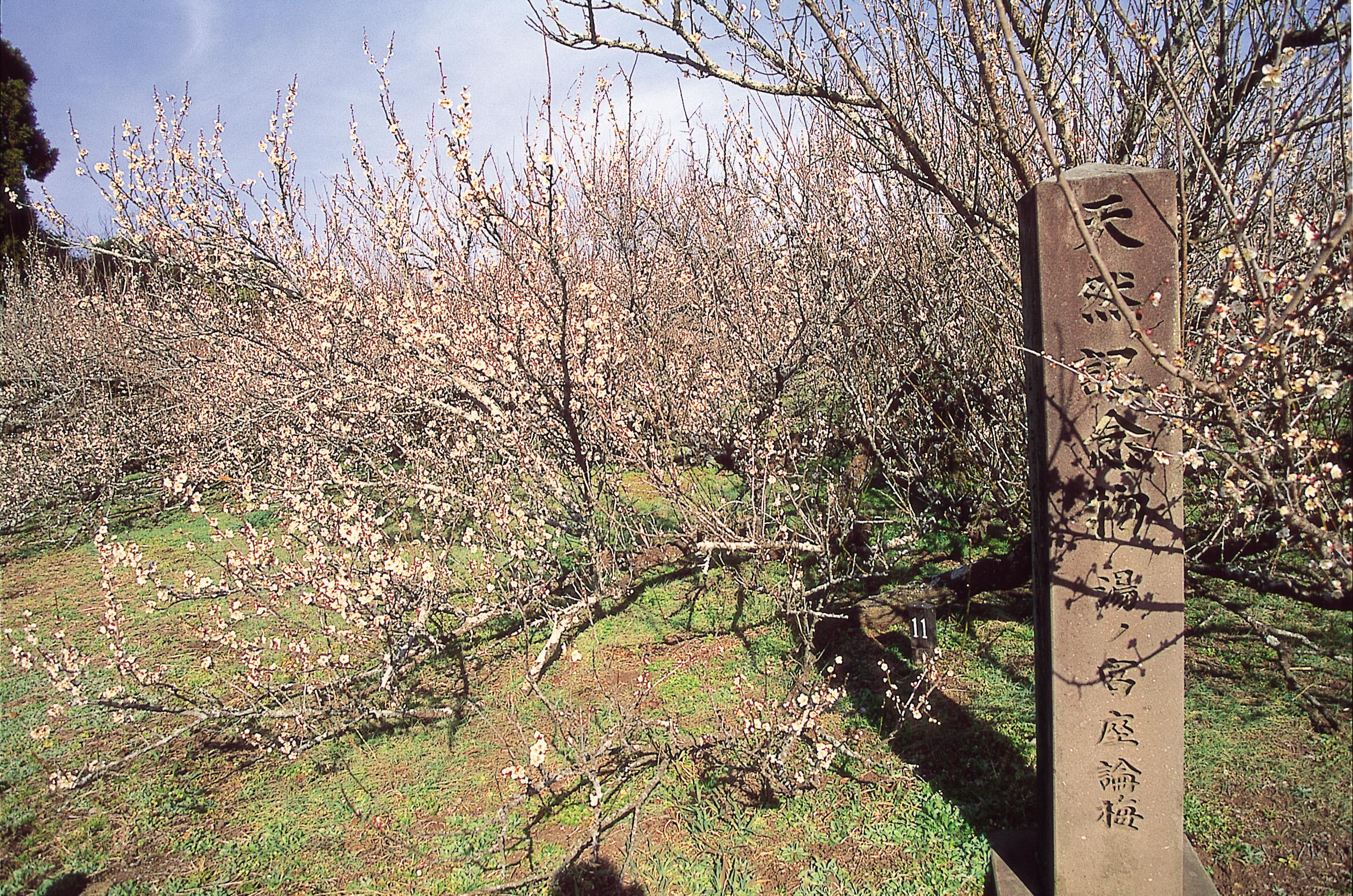
Designated as a national natural monument and more than 600 years old
Designated as a national natural monument, the ume (Japanese apricot) garden is over 600 years old.
It is said that the original single plum tree grew horizontally to form a new branch, giving it its present appearance. It is also called "Garyubai" (literally "lying dragon plum") because of its resemblance to a dragon crawling on the ground.
There are various theories about the name "Zarome," including that it was named after a type of plum called "Zaromi," and that it was named "Zarome" after a dispute between the Sadohara and Takanabe clans over ownership of a plum grove during the Edo period, when the two clans argued over the ownership of the grove.
Every year in early February, an event is also held, with stalls and workshops.
| name | Japanese apricot kale (Brassica rapa var. acephara) |
|---|---|
| address (e.g. of house) | Nitta, Shintomi Town, Koyu-gun, Miyazaki Prefecture, 889-1406 |
| date(s) (e.g. for exhibition) | Early to mid February |
| Hours. | — |
| supplementary information | ▼For more information on the event, click here. Shintomi Town ■Nearby Roadside Stations Photo courtesy of Miyazaki Prefecture Tourism Association |
Garyubai Plum at Fujikawa Tenjin → Roadside Station Akune
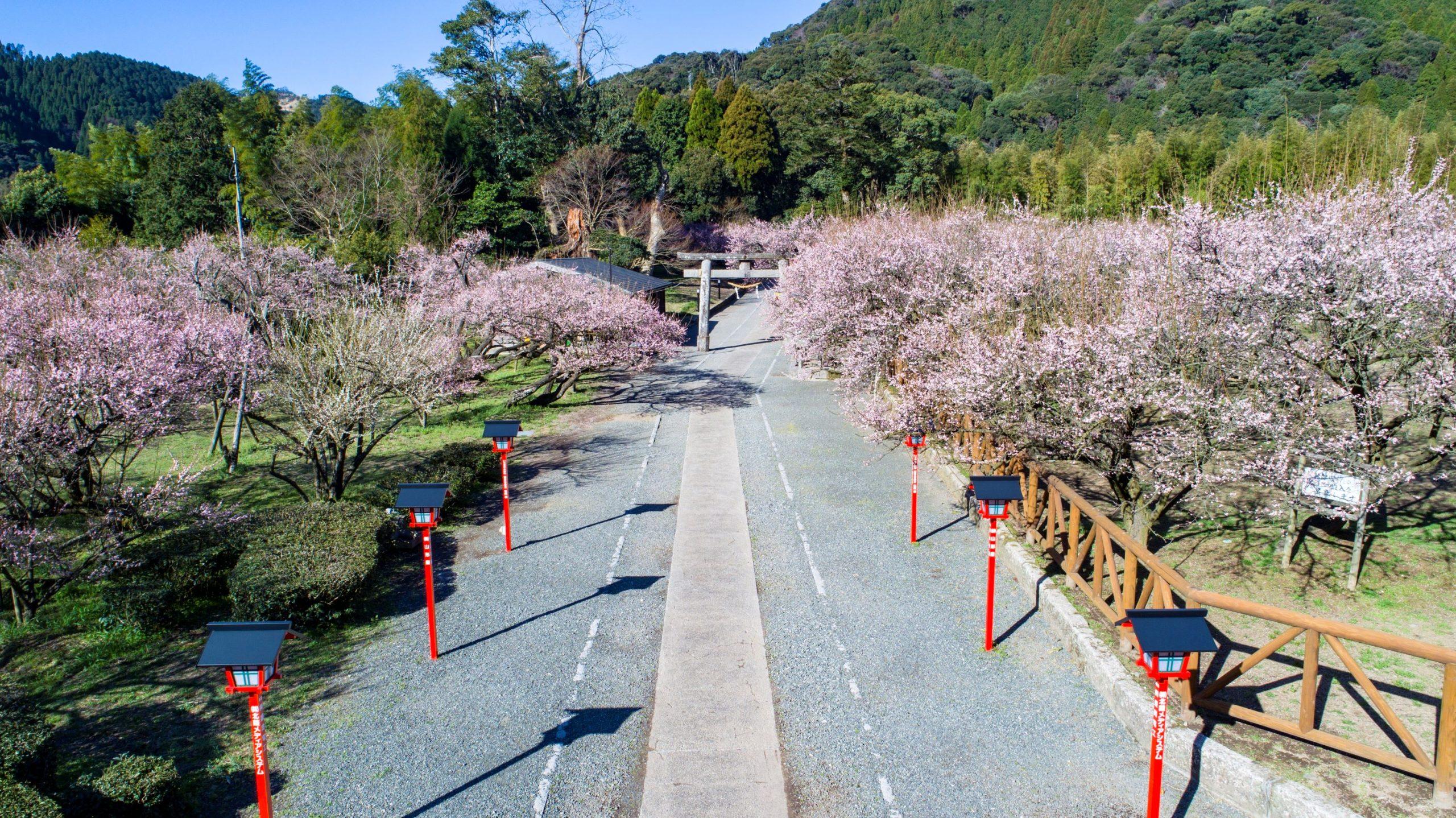
55 stocks are designated as national natural monuments
Fujikawa Tenjin enshrines Sugawara Michizane, a well-known god of learning. Legend has it that after Michizane was left to Dazaifu, he fled further and retreated to Fujikawa Kitano, where he died. There are approximately 300 plum trees in the precincts, 55 of which are designated as national natural monuments.
Garyubai" is called "Garyubai" because the trunk of the tree looks like a dragon lying on the ground, and its tasteful branches delight viewers.
| name | Garyubai plum tree at Fujikawa Tenjin |
|---|---|
| address (e.g. of house) | 1295 Fujikawa, Togo Town, Satsumasendai City, Kagoshima Prefecture, 895-1102 Usually best from mid-February to early March |
| supplementary information | ▼Information details can be found here. Satsumasendai Sightseeing Product Guide ■Nearby Roadside Stations Photo courtesy of Satsumasendai City |